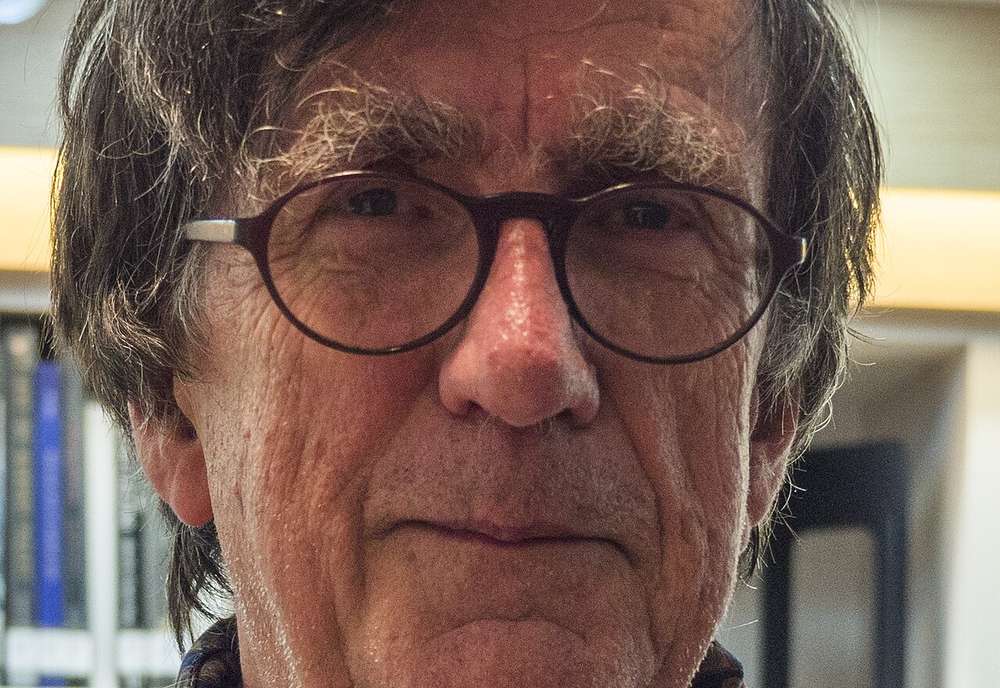
Bruno Latour urges sociologists to trace how an order is actually constructed. People act in conjunction with documents, technical systems, buildings, microbes, telephones, and standards. Things do not have human intentions, but they can enable, hinder, record, and direct action. A problem often becomes more amenable to change when the entire network is made visible.

Actors, Actants, and Compositions
In actor-network theory, an “actant” refers to something that makes a difference in the course of an event. A person, a door closer, a form, or an algorithm can alter what others need to do. The concept does not imply that everything is human or morally equivalent. It is a methodological rule: do not decide in advance what explains the outcome.
A composition consists of heterogeneous parts that are temporarily held together. When something breaks, the network becomes visible: spare parts are missing, permissions halt the work, or a person turns out to possess knowledge that the system took for granted. For a good life, we need to see which connections actually sustain everyday life.
Create an actant map of an everyday action
Purpose: To highlight how people, things, and rules together produce a result.
Choose a specific action that recurs in everyday life.
List the people, objects, documents, programs, and places that must interact.
Write down what each element enables, requires, or hinders.
Identify a connection where a failure has consequences throughout the entire network.
Change or strengthen a harmless connection and observe what happens.
Afterward: The map replaces a simple question of blame with a description of where the capacity for action actually lies.
Limitations and when the exercise should not be performed: Do not modify technical, medical, or safety-critical systems without authorization.
Mediation and Translation
Latour distinguishes a neutral carrier from a mediator who alters what passes through. A form does not merely transmit information; its fields determine what can be entered. A recommendation algorithm does not merely display content but ranks and shapes the next action.
Translation occurs when an actor connects the interests of others to a project. To gain support, a group describes its goal in a way that also solves someone else’s problem. Translation can foster collaboration but can also distort or obscure what others intended. Therefore, every step must be scrutinized.
Track a task through its intermediaries
Purpose: To see how information changes as it passes between people, documents, and systems.
Choose a task that goes through at least three steps.
Record or describe its form at each stage, omitting any personal information.
Note what is added, standardized, or omitted.
Ask which decision each change makes easier.
Suggest a feedback loop where the original experience can correct the system’s version.
Afterward: A better chain preserves what is needed for decision-making without pretending that the translation is neutral.
Limitations and when the exercise should not be performed: Do not use classified material. Data protection and organizational rules also apply in an analysis exercise.
Black Boxes and Visible Maintenance
When a technical or organizational solution works, its inner workings are taken for granted. Latour describes this as a black box: we see inputs and outputs but not the negotiations, standards, and maintenance. The box is often opened only when it fails.
The good life depends on a great deal of such invisible maintenance. Cleaning, data quality, repairs, and care make other actions possible. Opening a black box can lead to fairer recognition and more robust systems, but the analysis should not foster suspicion toward everything that works.
Open a black box whose maintenance is overlooked
Purpose: To discover which tasks and resources keep a taken-for-granted function running.
Choose a service, technology, or routine that is usually just expected to work.
Track the people, materials, and checks required to produce the result.
Note which maintenance tasks lack a schedule, status, or person in charge.
Describe what happens when maintenance is postponed.
Suggest a clear point of responsibility or resource that will prevent the next failure.
Afterward: This exercise makes dependencies visible before a failure occurs and can provide maintenance work with a reasonable status.
Limitations and when the exercise should not be performed: Do not open systems in a way that threatens security, integrity, or operations.
Controversies and Shared Worlds
Latour’s studies of science show how facts are stabilized through instruments, colleagues, institutions, and repeated testing. When a controversy is open, more actors and uncertainties become apparent. When it is resolved, the result can be used as a stable fact in new networks.
In public issues, people often need to build a shared world before they can agree on a solution. Which measurements, places, species, and groups should be counted? A good process brings relevant stakeholders and material consequences into focus without treating every claim as equally well-substantiated.
Build a shared fact map for a minor controversy
Purpose: To distinguish disagreement over values from disagreement over measurements, those affected, and the sequence of events.
Choose a well-defined local issue where dialogue is possible.
List the parties’ claims and the evidence each claim requires.
Include the places, things, and groups that are affected but are not present in .
Indicate what is well-documented, uncertain, and value-dependent.
Agree on a shared observation or measurement that can improve the next decision.
Afterward: The goal is not total agreement, but a better common basis for decision-making.
Limitations and when the exercise should not be conducted: Do not use the exercise to spread medical misinformation or to relativize established safety knowledge.