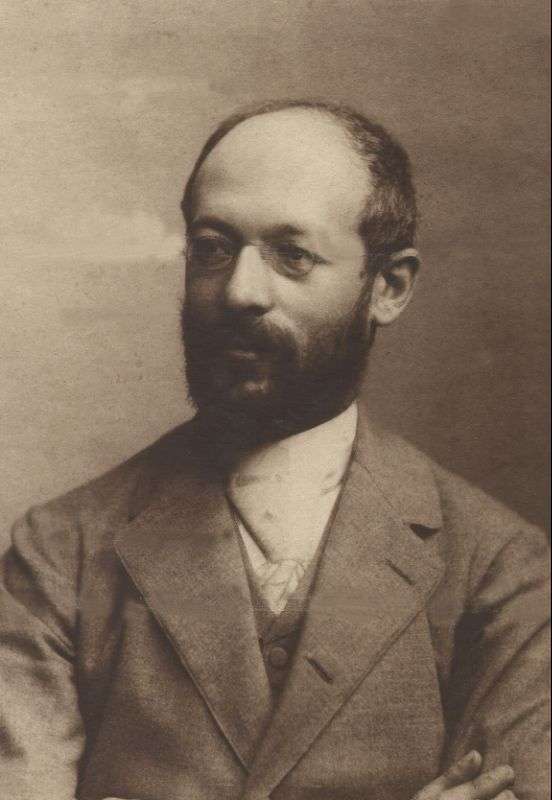
Georg Simmel turns his attention to the forms of interaction: closeness and distance, exchange and conflict, dyads and groups, secrets and alienation. He also shows how the density of the metropolis and the monetary economy shapes attention and relationships. His sociology helps you see patterns that recur in very different contexts.

Social Forms and Changing Content
Simmel analytically distinguishes between social form and social content. The content can be love, competition, work, faith, or knowledge. The form describes how people relate to one another: cooperation, subordination, exchange, conflict, secrecy, or sociability. The same content can take on different forms, and the same form can carry very different content.
This distinction makes it possible to see why two groups with completely different goals can nevertheless develop similar hierarchies and conflicts. It also shows why a change of subject does not always resolve a relational problem. If the form persists—for example, when one person must constantly mediate between two others—new issues can follow the same pattern.
For the good life, form analysis provides a practical perspective. Instead of immediately deciding who is at fault, you can ask what relational form is emerging, how it is rewarded, and what would happen if the form were to change.
Distinguish the form of the relationship from its content
Purpose: To discover a recurring pattern of interaction that persists even when the subject changes.
Choose two or three recurring situations with different content but the same people or setting.
Describe the topic in each situation without interpreting the participants’ personalities.
Compare who initiates, mediates, withdraws, has the final say, or withholds information.
Label the pattern using a common sociological term, such as competition, subordination, coalition, or exchange.
Try making a small change to the pattern and observe whether the content also begins to be handled differently.
Afterward: Form analysis makes relationships less mysterious. It reveals what is repeated and where a new way of interacting can break the pattern.
Limitations and when not to do the exercise: Do not use this exercise to confront a violent or controlling person. In cases of abuse of power, safety and support are needed, not a social experiment.
The Dyad, the Triad, and the Third Position
A dyad consists of two people and depends on both parties’ continued participation. When a third person enters, the dynamic changes qualitatively. The third person can mediate, create a majority, pit the others against each other, or become the one who is left out. Simmel thus demonstrates how group size creates new opportunities and risks.
The triad is not merely a dyad plus one person. It can resolve a deadlocked conflict through a mediator, but it can also make coalitions possible. In work groups and families, it becomes important to observe whether the same person consistently assumes the role of mediator or whether two people build their consensus by defining the third person as the problem.
For the good life, this means that a conflict sometimes requires a new position rather than better arguments. A neutral facilitator, rotating responsibilities, or clearer shared rules can change the dynamic. But the third person must have a mandate and must not be made responsible for maintaining everyone’s relationships.
Explore the third position
Purpose: To see how a third person changes power, conflict, and responsibility within a group.
Choose a real-life situation in which three people or three groups interact on a recurring basis.
Describe which two most often form a pair and on which issues the coalition arises.
Note whether the third party acts as a mediator, winner, messenger, or outsider.
Examine who benefits from this dynamic and who bears the brunt of the relationship’s tensions.
Suggest a rotation, direct communication, or a shared rule that distributes responsibility more equitably.
Afterward: Once the third position becomes visible, the group can stop treating a recurring role as the person’s natural trait.
Limitations and when not to do the exercise: Do not take on the role of mediator in a conflict where you lack confidence, a mandate, or competence. Professional mediation may be necessary.
The Stranger and Social Distance
Simmel’s stranger is not merely an unknown person. It is a social position that combines closeness and distance: someone is within the group’s circle but is simultaneously regarded as an outsider. This position can provide freedom of movement and a unique perspective, but it can also make the person the bearer of generalizations.
Social distance, therefore, is not solely about physical proximity. A person may be present daily yet be excluded from trust and informal codes. Another may stand farther away yet still gain access to personal stories precisely because she is not entangled in the group’s past conflicts.
A healthy social life requires both closeness and the possibility of distance. Complete assimilation makes it difficult to think independently, while a constant position as an outsider hinders a sense of belonging. The question is whether people can move between participation and distance without being reduced to representatives of a category.
Draw a map of closeness and distance
Purpose: To distinguish between physical presence, access, trust, and belonging in a social environment.
Choose a group or place where you participate enough to be familiar with its daily life.
List who is physically present and who has access to information and decisions.
Identify instances where someone is close in one sense but kept at a distance in another.
Note what generalizations are made about new, temporary, or different participants.
Choose a change that provides genuine access without requiring the person to give up all distance.
Afterward: Belonging is multidimensional. The map shows where an environment offers presence but not participation, or participation without a safe distance.
Limitations and when not to do the exercise: Do not map sensitive identities publicly, and do not make one person the spokesperson for an entire group.
Big City, a Blase Attitude, and Adventure
In his analysis of the metropolis, Simmel describes how dense impressions, rapid shifts, and the precise comparisons of money alter human attention. The blasé attitude serves as a defense against overstimulation: differences lose their ability to move us. It is not merely a personal shortcoming, but a possible adaptation to an environment that constantly demands a response.
At the same time, the modern environment offers freedom from the intrusive control of small groups. The city makes more ways of life and encounters possible. Simmel’s analysis thus brings together protection and loss: distance can preserve independence but also make the world shallow and indifferent.
The flâneur’s open-ended stroll can serve as a counter-practice when it makes one’s attention receptive to places and people without a predetermined consumerist goal. The point is not romantic aimlessness, but rather to create a defined situation where something unexpected can become visible.
Take a slow sociological walk
Purpose: To explore how pace and demands on attention shape one’s relationship to a place.
Choose a safe public route that you normally take with a clear destination in mind.
Walk it for a set period of time without headphones, shopping, or the need to run several errands.
Note rhythms, boundaries, meeting places, waiting times, and which groups are given or denied space.
Write down when you became receptive and when you protected yourself through indifference or quick categorization.
Choose a small change in your daily routine or environment that reduces unnecessary overstimulation.
Afterward: The walk trains your attention to the social environment. It doesn’t need to create a powerful experience to provide insight.
Limitations and when the exercise should not be done: Do not choose an unsafe place or time. Do not photograph or record identifiable people without their consent.