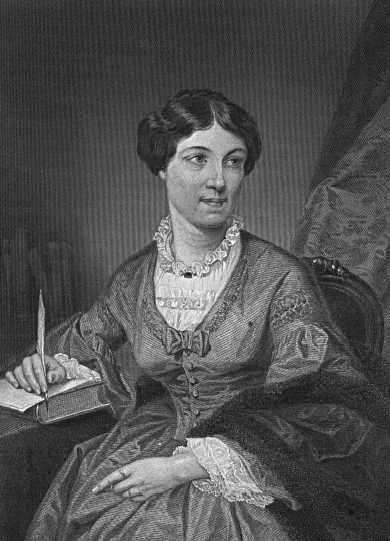
Harriet Martineau turned observation into a sociological discipline. She compared societies’ stated principles with their institutions, customs, and everyday actions. She turned her attention to matters often excluded from the public sphere: the status of women, children, households, health, and the treatment of marginalized groups. Her method helps you investigate without settling for official rhetoric.

Morals and Manners
In *How to Observe*, Martineau distinguishes between morals and manners. Morals refer to the values and notions of right and wrong that a society claims to uphold. Manners are the practices, habits, and arrangements through which life is actually organized. The sociologist’s task is to compare the two without assuming that solemn formulations accurately describe everyday life.
A society may proclaim equality while access to education, politics, or respect is distributed unevenly. Martineau therefore analyzed institutions, statistics, objects, housing, and everyday relationships. She paid particular attention to groups whose experiences were not taken seriously by the official narrative.
For the good life, this method requires that values be put into practice. Care, freedom, and equality are given substance through time, space, money, responsibility, and who is allowed to speak . The gap between ideals and customs is not always hypocrisy; it can also reveal institutions that need to change so that people can live as they say they do.
Compare a stated ideal with everyday practices
Purpose: To investigate whether a shared value takes on a material and relational form.
Choose a group or organization that explicitly values, for example, equality, care, or participation.
Write down the ideal in the group’s own words and indicate where it is expressed.
Observe how time, space, tasks, information, and opportunities to speak are actually distributed.
Note both practices that uphold the ideal and those that contradict it.
Suggest a concrete change where the greatest discrepancy between principle and practice exists.
Afterward: The gap between the ideal and current practice identifies an area for improvement. This gap should be addressed through concrete actions, not merely used as a criticism.
Limitations and when the exercise should not be done: Do not observe private situations without consent, and avoid collecting more personal data than the question requires.
Systematic Observation
Martineau argues that the traveler and the observer need a method before gathering impressions. Without clear questions, the person easily notices the unusual, what confirms expectations, or what the hosts want to show. Observation therefore requires multiple types of evidence and a conscious order.
She recommended paying attention to public institutions, religious practices, education, the criminal justice system, charity, work, the status of women and children, and the health of the population. Conversations were important but insufficient. People may describe society through their own perspective, while institutions and recurring practices reveal different patterns.
A Martineau-style observation therefore combines what people say, what they do, and what physical evidence is present. It looks for counterexamples and compares multiple situations. It serves as an antidote to drawing broad conclusions from a single, powerful encounter.
Make an observation using three types of evidence
Purpose: To reduce the risk that an initial interpretation becomes the entire explanation.
Formulate a specific question about a public or shared environment.
Gather evidence from what people voluntarily say about the situation.
Gather evidence from recurring behaviors and one piece of evidence from the environment’s rules, objects, or statistics.
Look for a case that contradicts your initial interpretation and write down what it changes.
Conclude with a cautious conclusion and a question that requires further evidence.
Afterward: Systematic observation makes knowledge less dependent on what is most visible or dramatic. Uncertainty should be noted where the evidence is thin.
Limitations and when the exercise should not be done: Do not record, photograph, or collect sensitive information without permission. Observation should not become covert surveillance.
The Household as a Social Institution
Martineau took the conditions of women and the household seriously from a sociological perspective at a time when much social thought confined politics and economics to the public sphere. The division of labor, dependency, ownership, education, and rights shaped life at home and influenced who could participate in public life.
The private sphere is therefore not isolated from institutions. Working hours, housing, schools, healthcare, and social security influence how care and household work are distributed. Those who perform invisible work may simultaneously lose time, income, and a public voice.
Achieving a good life requires an analysis that accounts for the work that makes everyday life function. The goal is not to turn every relationship into an accounting exercise, but to reveal where love and duty are used to conceal a persistent imbalance.
Make household work visible
Purpose: To see how time, responsibility, and institutional conditions shape everyday care.
Choose a typical week and list recurring practical, emotional, and administrative tasks in the household.
Note who identifies the need, plans, carries out, and follows up on each task.
Identify which work schedules, incomes, operating hours, or public services influence the distribution of tasks.
Distinguish between temporary differences and patterns that limit someone’s rest, income, or participation.
Negotiate a concrete redistribution and identify which problems require a solution outside the household.
Afterward: The goal of this exercise is to make responsibilities negotiable and connect the household to societal conditions—not to turn the relationship into a points game.
Limitations and when not to do the exercise: Do not do this exercise in a relationship where financial control or violence makes open negotiation dangerous. Seek support in a safe way.
The Observer’s Position and the Discipline of Comparison
Martineau was aware that the observer brings along values, habits, and expectations. A traveler risks treating their own customs as natural and those of others as deviations. Therefore, an explicit criterion for comparison and an awareness of the limitations of one’s own position are necessary.
In *Society in America*, she compared, among other things, the country’s democratic principles with slavery and the subordination of women. The comparison was not based on British customs as the yardstick, but on the principles to which the society under study itself aspired. This made it possible to reveal the contradictions from within public morality.
For the good life, this means that criticism becomes more just when it specifies its standard of measurement and also subjects one’s own environment to the same scrutiny. Reflexivity is thus part of the method: what can my position see, what does it miss, and whose voice needs to be heard?
Write a position note for your observation
Purpose: To make the starting point of the interpretation visible without letting it replace the issue at hand.
Take an observation or conclusion that you have already formulated.
Describe the role, experience, and resources you yourself had in the situation.
Note which people or places you were unable to observe and what assumptions you made.
Specify which principle or comparison was used to assess what you saw.
Ask someone in a different relevant position to verify a specific part of the interpretation.
Afterward: The position note is intended to define the scope of knowledge and improve it. It does not make all interpretations equally plausible and does not eliminate the need for evidence.
Limitations and when the exercise should not be done: Do not demand unpaid emotional or educational labor from a marginalized person. Use published knowledge or alternative, voluntary approaches.