The book’s conclusion is not about leaving private life behind, but about recognizing when a private experience can also become knowledge, care, and action within a broader context.
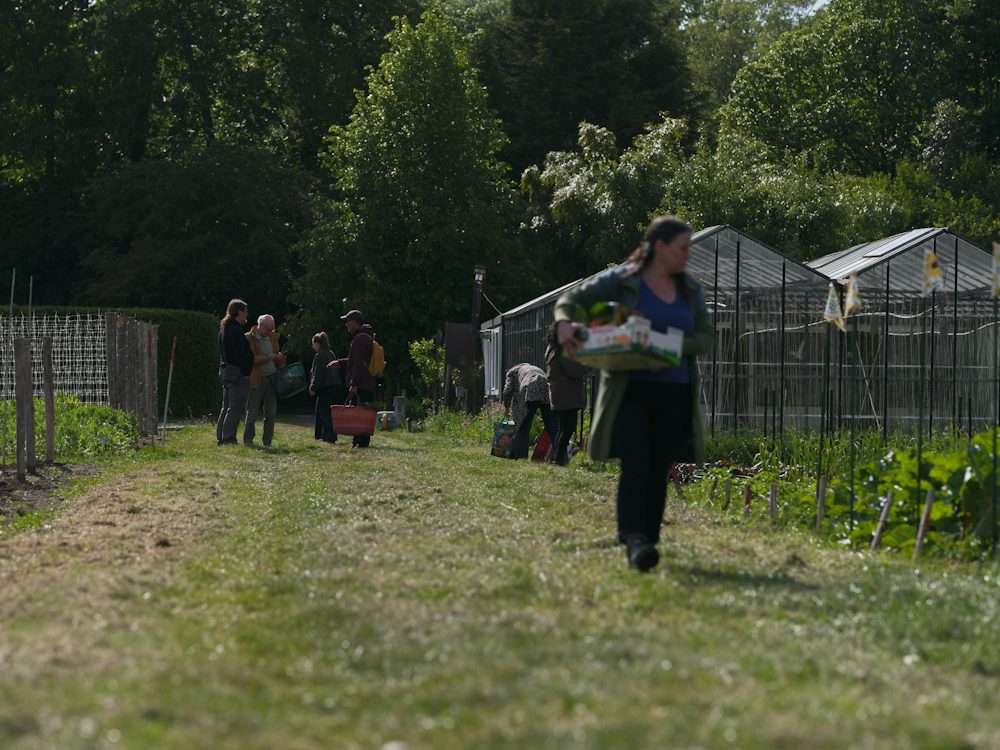

Throughout this book, the focus has repeatedly shifted between the individual and the social conditions in which that individual lives. In the final chapter, the question becomes what that shift might mean for citizenship. Citizenship is used here in a broader sense than the right to vote, party politics, or a formal relationship with the state. It encompasses ways of taking responsibility for something shared, listening to others who are affected, contributing to institutions, and participating in issues that do not solely concern one’s own household or career.
The word “possible” in the title is important. A civic horizon is not an obligation to become an activist, speak publicly, or take on yet another task on top of work, caregiving, and recovery. People have different levels of security, time, health, access to language and institutions, as well as different experiences of being listened to. For one person, a reasonable step might be to attend a local meeting. For another, it might be sharing knowledge with a trusted person, supporting someone who is already taking action, or simply realizing that a personal concern is shared by others. Even choosing not to participate can be a well-founded decision.
The main text describes a balance between private struggles and civic struggles. These terms are not meant to create a hierarchy in which close relationships are deemed less valuable. Private life encompasses love, care, rest, and responsibility—all of which society depends on. At the same time, private life can become overburdened if it is expected to bear the full weight of all meaning, conflict, and change. The civic potential lies in the fact that certain experiences can be connected to other people and shared circumstances—without the private sphere being dissolved or used solely as a means to a public end.
When a private concern is also a shared issue
Mills distinguishes between private concerns and public issues. A concern is experienced within a person’s immediate life and relationships. A public issue becomes apparent when many experiences are linked to the way institutions and social structures are organized. Unemployment, overcrowding, loneliness, or lack of accessibility can be deeply personal experiences and, at the same time, exhibit patterns that cannot be explained by each individual’s characteristics.
Identifying a common pattern does not mean that private experiences must be made public. Privacy remains a value. Those who have been affected should not have to share more details to prove the existence of a structural issue. Sociological imagination can begin quietly: by comparing experiences, examining how an organization operates, or asking which groups are affected. If the issue is shared with others, it must be done with consent and with respect for the fact that people may wish to describe the same conditions in different ways.
From Personal Concerns to a Shared Issue
Purpose: To explore whether one’s own experience is part of a broader social pattern without having to disclose private information.
Here’s how:
Choose a recurring concern and describe what happens in your specific daily life.
Ask which rules, institutions, economic conditions, or social norms might influence that experience.
Look for a pattern: Who else might be affected, and in what different ways? Avoid assuming that their experience is identical to yours.
Formulate the shared question without personal details—for example, as an issue related to access, working conditions, care, or treatment.
Decide whether the issue should remain a matter of personal understanding, be shared with a trusted person, or be brought into a relevant context.
Reflection: What becomes possible to understand when the experience is neither reduced to a private failure nor dissolved into an abstract social issue?
Limitation: You do not need to disclose private experiences to reveal a social pattern. Protect other people’s privacy and obtain consent before using their stories.
Networks also consist of weak ties
Mark Granovetter demonstrates how weak ties can connect parts of a social network that would otherwise be separated. A weak tie is not a bad relationship. It is a less close connection: a former colleague, neighbor, classmate, acquaintance from a club, or someone you meet in a recurring activity. Close relationships often provide strong support, but people outside one’s inner circle can bring different information, different perspectives, and connections to new contexts.
This should not be interpreted as advice to use people as resources. A contact is a person with their own boundaries and interests. A civic network becomes sustainable through reasonable requests, reciprocity, and respect for a “no.” It can start with asking about an organization, sharing a relevant report, offering concrete help, or asking for guidance on the right public agency to contact. Even a small connection should have a clear purpose and must not require intimacy.
Collective capacity is more than the sum of individual wills
Robert Sampson, Stephen Raudenbush, and Felton Earls used the concept of collective capacity in a study of Chicago neighborhoods. The concept combined social cohesion and trust with a willingness to act for the common good. The study focused on violence and a specific American context, so the results cannot be mechanically applied to every location. The useful question is more limited: what relationships and shared expectations enable people in a neighborhood or organization to solve a problem together?
A neighborhood is not responsible for all of its conditions. Collective capacity must therefore not become a new way to blame residents for insecurity, inadequate services, or poverty. Public resources, housing policy, the labor market, and institutional presence all play a role. But within these conditions, it can still be valuable to identify where people are already helping one another, which issues lack a legitimate forum for discussion, and which public actors need to get involved.
Investigate local collective capacity
Purpose: To identify where trust, practical assistance, and collaborative problem-solving already exist—and what institutional support is lacking.
Here’s how:
Choose a specific place or activity: a neighborhood, a school, a workplace, a library, or a community organization.
Describe two situations where people are already helping one another or maintaining something together.
Write a question where cooperation is often lacking. Describe what resources, meeting formats, or responsible parties are missing.
Identify an existing legitimate point of contact, such as an organization, a council, a relevant government agency, or a regular meeting.
Formulate a brief question that can test whether more people want to explore the problem together, without you taking responsibility for the entire process.
Reflection: What is already supported by relationships, and what needs to be supported by an institution with resources and accountability?
Limitation: This concept must not be used to place blame on residents or volunteers when public resources are lacking. The original study cannot be treated as a universal model.
Caring for a Common Resource
Elinor Ostrom’s research shows that common-pool resources do not always have to be governed solely through private ownership or central control. In various contexts, people have developed rules for boundaries, participation, monitoring, and conflict resolution. Ostrom’s point was not that there is a universal checklist. Institutions need to be tailored to the resource, its history, the participants, and the surrounding power dynamics.
A shared resource can be large, but it can also be something ordinary: a community center, shared equipment, a farm, a digital knowledge archive, or limited work hours that several people need to use. When the rules are unclear, conflict or invisible maintenance work can easily arise. A civic action in such a situation might be to clarify responsibilities, decision-making processes, and opportunities to influence outcomes. The change should be brought before a forum that actually has the legitimacy to make decisions.
Make a shared resource understandable
Purpose: To examine how a specific shared resource is used, managed, and can be influenced by those affected.
Here’s how:
Choose a specific resource that multiple people use or depend on.
List who is allowed to use it, who manages it, and who can change the rules.
Describe how usage, maintenance, and conflicts are handled in practice. Highlight anything that is unclear or relies on unpaid labor.
Ask those involved if a minor rule or division of responsibilities could be improved. Gather different perspectives before proposing a solution.
Present a limited and reversible proposal in a legitimate forum and specify when it should be followed up on.
Reflection: Which problem appeared to be a lack of consideration but was also linked to unclear rules or unevenly distributed maintenance responsibilities?
Limitation: Ostrom’s work highlights institutional variation, not a one-size-fits-all model. Respect ownership, security, local knowledge, and formal decision-making processes.
Public dialogue begins with those who are affected
Michael Burawoy describes public sociology as a conversation between sociology and various publics. Here, a “public” is not merely a large audience. It can be a group of people affected by an issue, seeking to understand it, and able to participate in a conversation about what should be done. This makes knowledge relational: the researcher, public servant, or engaged citizen does not merely speak to people but must also be able to listen and adjust their wording.
Identify the affected public
Purpose: To formulate a shared question together with—not just in front of—the people who are affected.
Here’s how:
Write down the question you are considering raising and which groups are affected directly, indirectly, and in various ways.
Ask what knowledge the affected parties might need and what knowledge they already have that is missing from your wording.
Identify a setting where active listening is possible: an association meeting, consultation, council, working group, study circle, or small-group discussion.
Formulate an open-ended question and clearly define the limits of what you know. Go in with the intention of learning, not to seek support for a pre-determined solution.
After the conversation, write down what needs to be changed in the problem statement and who should be responsible for the next decision.
Reflection: Who emerged as a source of knowledge when the question was framed based on the different perspectives of those involved?
Limitation: Do not use other people’s experiences, images, or stories without their consent. A public issue does not override privacy, confidentiality, or the right to opt out.
Anyone who turns a private experience into a public issue otherwise risks speaking on behalf of others without their involvement. Linda Tuhiwai Smith’s critique of colonial research traditions brings the ethical question into sharper focus: who frames the problem, who owns the data, who benefits from the results, and who has the right to say no? Her work is grounded in the experiences of Indigenous peoples and should not be turned into a generic, detached method. But it demonstrates why knowledge production needs to be examined from the perspectives of those affected and why consent is not merely an administrative detail.
Assessing Responsibility Toward Those Affected
Purpose: To verify whether a planned knowledge-based or advocacy initiative gives those affected genuine influence.
Here’s how:
Choose a planned text, survey, presentation, or activity that deals with other people’s circumstances.
Note who formulated the question, collected the material, interprets the results, and benefits from the initiative.
Identify which affected parties lack the opportunity to review, object, or say no.
Create a concrete opportunity for them to influence the outcome before publication or a decision is made, allowing sufficient time and providing clear information.
Determine what you are prepared to change, remove, or return if those affected object to its use.
Reflection: Is participation designed so that those affected can influence the results, or only so that they can confirm them?
Limitation: This exercise does not replace formal ethics reviews, data protection, or specific protocols for Indigenous knowledge. Do not generalize such knowledge outside its context.
Citizenship as Part of Life, Not as an Extra Achievement
The main text suggests that citizenship can be integrated into relationships, work, and leisure. This idea, of course, needs to be approached with care. It does not mean that every meal, hobby, or friendship should be politicized. It means that concern for shared conditions can find a concrete place in the things we already do. Professional expertise can be applied in a community organization. A book club can provide a space for a local issue. A friendship can encompass mutual support without reducing the relationship to a mere function.
ABT’s concept of embedded autonomy helps maintain this balance. A person needs both a sense of belonging and personal freedom, both privacy and the opportunity to participate in something shared. A commitment that undermines rest, close care, or livelihood may need to be scaled back. Similarly, private life can benefit from not bearing the entire responsibility for meaning and change. What matters is not how much public activity is allowed, but whether its forms are compatible with values, relationships, and actual circumstances.
Make room for a shared question within something that already exists
Purpose: To try out a small civic practice without creating a separate project.
Here’s how:
Choose a relationship, work task, or leisure activity that is already a stable part of your life.
Write down a shared value that is already present there, such as accessibility, education, care, justice, or community well-being.
Formulate a small practice that fits the context: share relevant knowledge, ask a shared question, contribute a specific skill, or participate in an existing forum.
Assess the cost in terms of time, energy, privacy, and relationships. Scale back the scope until the practice is reasonable.
Try it once, and then decide whether to repeat it, modify it, or set it aside.
Reflection: How can a shared concern find its place without the relationship, work, or leisure time losing its own value?
Limitation: It is legitimate to opt out. Do not turn loved ones, colleagues, or social circles into unwilling participants in a commitment they have not consented to.
Civic competencies are developed through repeated practice
The concept of “craft citizenship” in the main text is inspired by Richard Sennett’s works on craftsmanship and collaboration. Citizenship is thus not seen as a mere opinion or identity, but as skills that develop over time: listening, summarizing, collaborating across differences, simplifying without distorting, building alliances, preparing for a meeting, and staying focused on the issue at hand without being harsh toward the other party. Such abilities are unevenly distributed because people have had different levels of education, access, and experience.
The “craftsman’s perspective” must not become a prerequisite for a lifelong career in politics. Rather, it grants the right to start with a limited role and to learn in a real-world yet safe environment. Those who participate do not need to be the ones who speak the most. Taking notes, arranging a venue, verifying facts, welcoming a new participant, or voicing a minority objection can be essential civic acts. Ability is assessed by what the situation requires and what it makes possible for others, not by status or visibility.
Practice a civic competency
Purpose: To develop a single, concrete skill in a real-world context with a reasonable scope and feedback.
Here’s how:
Choose a competency needed in a context you already have access to: listening, summarizing, organizing, fact-checking, inviting others, or managing disagreement.
Describe the skill as a tangible action and choose the smallest real-life situation in which it can be practiced.
Ask an experienced or trusted person what constitutes a sufficiently good performance in this specific context.
Carry out the specific task and ask for objective feedback on the action, not on your personality.
Decide whether you want to repeat the same task, adjust the difficulty level, seek training, or step away from the role.
Reflection: Which part of your ability was supported by the context, and which part needs more practice or better access?
Limitation: Civic competence is socially constructed. Do not individualize barriers stemming from language, disability, discrimination, economics, or exclusionary organizations.
Critical Optimism Without a Promise of Success
Mary Holmes uses critical optimism to describe an approach that takes problems and power seriously without making change unthinkable. In the main text, this is linked to real possibilities rather than to unfounded hope. Optimism, then, is not a demand for positive feelings. It can consist of distinguishing what is difficult from what is impossible, recognizing an existing capacity or institution, and formulating an action whose value does not depend on guaranteed success.
Criticism is needed to identify resources, interests, costs, and power. Optimism is needed to prevent the analysis from becoming a self-fulfilling resignation. The two must be held together. A social problem may be greater than an individual’s capacity and yet still allow for action at the appropriate level. That action might involve nurturing an institution, bringing an experience to a shared forum, supporting someone else’s work, or refraining from a destructive form of participation.
Conclude with a critically optimistic statement
Purpose: To summarize a problem, its real obstacles, and a voluntary opportunity without promising success.
Here’s how:
Write down the shared question that has become most important to you while working on the book.
Write down two real obstacles: one related to resources or power, and one related to coordination, knowledge, or access.
Write down an existing capability, relationship, or institution that makes some form of action possible.
Formulate a specific next step and identify who you need to collaborate with or who it should be directed toward.
Add a rule of thumb: When should you rest, step back, seek help, or hand things over to someone else?
Reflection: Can the wording be true to the challenges while still leaving a real possibility open?
Limitation: Optimism is not an obligation, and the outcome is not a measure of your worth. Do not choose any public or collective action that jeopardizes safety, health, livelihood, or the consent of others.
Concept Overview
Personal concern. A difficulty experienced in a person’s immediate life, relationships, and scope of action.
Citizenship. Practices in which people participate in, take responsibility for, or care for something in common; here, the term is used in a broader sense than party politics.
Private struggle and civic struggle. Terms used in the main text to describe responsibilities and endeavors in the private and collective or public spheres, respectively.
Weak ties. A less close social connection that can link different parts of a network and provide access to other perspectives and contexts.
Collective capacity. Trust and social cohesion combined with a readiness to act for a common cause in a specific context.
Shared resource. Something that multiple people use or depend on, and whose rules, maintenance, and conflicts need to be managed collectively.
Public sphere. A community of affected people who can develop knowledge and engage in dialogue regarding a shared issue.
Accountability to those affected. The requirement that the people affected be able to contribute to the formulation and interpretation of decisions and have a genuine opportunity to object.
Embedded autonomy. ABT’s balance between belonging and personal freedom of action, as well as between private life and civic participation.
Craft citizenship. The main text’s idea of civic capacities developed through recurring, concrete, and mindful practice.
Critical optimism. An approach that acknowledges real problems and power dynamics but still explores specific opportunities for change.
References
Berglund, A. (2026). Sociological Therapy and Diagnostics. Unpublished manuscript.
Burawoy, M. (2005). For public sociology. American Sociological Review, 70(1), 4–28. https://doi.org/10.1177/000312240507000102
Granovetter, M. S. (1973). The Strength of Weak Ties. American Journal of Sociology, 78(6), 1360–1380. https://doi.org/10.1086/225469
Holmes, M. (2016). Sociology for Optimists. SAGE.
Mills, C. W. (1959). The Sociological Imagination. Oxford University Press.
Ostrom, E. (2009). Beyond markets and states: Polycentric governance of complex economic systems. Prize lecture, December 8, 2009. NobelPrize.org. https://www.nobelprize.org/prizes/economic-sciences/2009/ostrom/lecture/
Sampson, R. J., Raudenbush, S. W., & Earls, F. (1997). Neighborhoods and violent crime: A multilevel study of collective efficacy. Science, 277(5328), 918–924. https://doi.org/10.1126/science.277.5328.918
Sennett, R. (2008). The Craftsman. Yale University Press.
Sennett, R. (2012). Together: The Rituals, Pleasures, and Politics of Cooperation. Yale University Press.
Smith, L. T. (2012). Decolonizing Methodologies: Research and Indigenous Peoples (2nd ed.). Zed Books.
SOCIOLOGY FOR THE GOOD LIFE